We shouldn’t have to worry about things that we shouldn’t have to worry about.

This post is going to be a bit different than what I usually do, but I really want to address this.

As someone who is signed up to get emails to sign petitions, I am honestly getting sick of it. Although I’m not that type of person to check my email every day, I try to make that effort, that way, I can stay up to date on things. The thing that I find sickening is the fact that we even need these petitions.

I see anywhere between 10 and 20 different petitions a week. I will say this again: BETWEEN 10 AND 20 DIFFERENT PETITIONS A WEEK.

There are petitions to save endangered ice seals, to stop USDA kitten cannibalism experiments, to permanently stop abusive VA dog experiments, to save jaguars; that’s just barely scraping the top of the ice when it comes to animals.

The fact that we have to go to great lengths to make sure that we have clean water to drink, for recreational purposes, for wildlife – it’s baffling! How about the fact that the most used and trusted platform -TripAdvisor- covers up sexual assaults, deletes reviews, refuses to remove businesses with assault allegations, and many other things. Or how about the fact that these states, these countries, are banning things that don’t affect them; like gay marriages and abortions.

Just today, I saw this one petition email that said “This cop killed my son. He doesn’t deserve a badge.’ So me being me, I clicked on it. A 12 year old boy, Tamir Rice, was shot and killed. Now Cleveland’s police union wants Timothy Loehmann, the police officer who shot Tamir, back on the force.

That one article, that one petition (among many others), sent me over the edge. The fact that we need these petitions, that we need to have to worry about these things, it’s an insurmountable problem. We shouldn’t have to worry about people getting shot by police officers. We shouldn’t have to worry about whether or not we’ll have clean water. We shouldn’t have to worry if we’re going to get arrested or killed if we are gay or trans. We shouldn’t have to worry about things that we shouldn’t have to worry about.

If you want, comment what we shouldn’t have to worry about. Comment what you think is outrageous in this world today. A comment may be small compared to other things, but no matter how small it is, it makes a HUGE impact on other people and other things.

The Three Scenarios

Although wolves are a big contributor, there are other things that help shape the environment and ecosystem. Below are three scenarios that may or may not happen – with or without wolves.

Scenario 1: What would the wilderness be like without wolves:

The ground would be trampled and eroded with elk and other hoofed mammals carelessly eating the grass. Little sprouts of new plant life being nibbled down to the roots, barely having time to fully grow. New, young trees don’t get a chance to grow to their full potential, therefore beavers cannot find enough wood to make their river dams. Loose soil and silt slide into rivers, making the river flow slower, which gives no habitat for native fish, frogs, and amphibians. Ungulates stroll nonchalantly throughout valleys, eating greedily, because their population grew past sustainability. In rain forests, fern prairies smother the earthen floor, suffocating the healthy underbrush.

Scenario 2: What the wilderness be like with wolves:

With the fear of a top predator, deer and elk stay away from rivers and meadows. Without the constant grazing of elk, hemlock trees, maples, willows, and cottonwood trees get a chance to sprout and grow. Beavers have more than enough wood to make river dams, making pools for ducks, fish, reptiles, and amphibians. Weasels, foxes, and other ‘scavengers’ eat whatever’s left of the prey the wolves left behind. Butterflies and bees flutter from flower to flower in the flourishing meadows. Bears feast on the berries from the many bushes. Songbirds flit from tree to tree, making their nests in the high up branches. With wolves keeping the coyotes from over breeding, there are more mice and rabbits running around. Instead of flying past a degrading forest, hawks and eagles swoop down to the ground and grab a hold of prey to bring back to their nests. Rivers steadily flow, allowing trout to be able to go back to their breeding grounds and replenish their population.

Scenario 3: What the wilderness would be like with wolves and tropic cascades:

Wolves chase elk away from riverbank willows and into the forest. Now elk graze in the higher meadows with an abundance of wildflowers. Streams and rivers move more slowly, dense with willows where beavers busily build their dams. In a valley, a fire is set to temper and open up the forest for more space and to allow more sunshine. With new growth, bears eat the fresh berries from the healthy bushes, that grow better after the burn. The ash fertilizes the ground, nourishing vegetation and helps grow healthier trees.

In the colder months, ungulates thrive on the thick shrubs and plush grass. After the fire, more wildflowers bloom, attracting bees, butterflies, and birds. Where slow, decomposing logs once lay, the fire burned it into ash. After the burn, fresh grasses, herbs, bushes, shrubs and trees grow, nourishing the future generations of wildlife. Animals -both predator and prey- coexist. No more species missing. 

To conclude, people are working on the recovery of wolves in hopes to see them return to their original territory. Many hope that North America’s wild land are replenished and returned to balance with the help of this predator. With hopes that future generations will be able to hear the howls of wild wolves.

To return wolves back into their natural, original territory, it will take not only time, but also change in cultural values and traditions. A true evolution of American mindset and values.

Google Search ‘Wolves’: onegreenplanet.org

M-44 ‘Cyanide Bombs’

There are many ways people get rid of predators, such as foxes, coyotes, wolves and bears. One of the few ways is trapping, aerial hunting and den hunting.

The three examples listed above are self-explanatory. Trapping is when someone uses a device to catch an animal. Aerial hunting is when hunters use airplanes or helicopters to track an animal in the snow, chase them to exhaustion and then shoot them from the air, or land the aircraft and shoot them from the ground, a practice that is known as “land and shoot”. Den hunting is when a hunter shoots an animal whilst the animal is still in its den.

Although there are many other ways to get rid of animals, there is one in particular that I want to address, and that is the ‘M44’ which is a cyanide ‘bomb’. It’s primarily used for coyotes, feral dogs and foxes.

Now, before I continue, cyanide is a fast acting, potentially fatal chemical. It can exist in different forms, but cyanide is commonly found in chickpeas and lima beans, seeds and pits of apples, cherries, pears, apricots, peach es and plums, almond and cashew nuts, vegetables in the cabbage family, alfalfa and sorghum, roots such as potatoes, cassava, radish and turnips, white clover and young bamboo shoots. It takes anywhere from 2-5 minutes for cyanide to take effect and kill a person. In that time frame, that person -or in this case, an animal- is fully conscious and can feel the full effect of the chemical.

Even though these cyanide bombs are used for coyotes, feral dogs and foxes, it effects other animals as well. Not only does it effect endangered animals such as grizzly bears, Canada lynx and wolves, it also has an effect on domestic animals and even children.

In 2016 alone, according to Wildlife Services’ data, their cyanide bombs killed 13,530 animals. Most of the deaths were foxes and coyotes, but it also included 321 animals that were not intentionally targeted, such as foxes, a black bear, raccoons, skunks, opossums, a fisher and family dogs. And in March of 2017, it poisoned a 14 year old boy and killed his dog.

The cyanide bomb looks like a sprinkler of sorts sticking out from the ground, so it is easily mistaken as something that is harmless, which is not the case. It is spring-activated and it shoots the poison up to five feet.

In August of 2017, the Wild Earth Guardians, the Center for Biological Diversity, and several other wildlife conservation groups petitioned the Environmental Protection Agency (EPA) to outlaw the cyanide bombs, but unfortunately, the EPA said that it will not ban them.

To conclude this article, I will put this into very, very simple terms: M-44 cyanide bombs are bad, not only for coyotes and foxes, but also for endangered animals, domestic animals, humans and the environment.

Image search for m44 cyanide bomb: idahostatejournal.com

Grey Wolves

The grey wolf has between 5 and 24 subspecies that is recognized in North America and 7 to 12 are recognized in Eurasia, with 1 recognized in Africa.

Grey wolves once used to roam all over North America, but by the mid 1930’s, they were killed off in most areas of the United States. Today, their range has been reduced to Alaska, Canada, Pacific Northwest, the Great Lakes and Northern Rockies. With a historic range of over two-thirds of the United States, they now only occupy less than 10% of that range.

Today, grey wolves have populations in Alaska, northern Michigan, northern Wisconsin, western Montana, northern Idaho, northeast Oregon, and the Yellowstone area of Wyoming. Mexican wolves, a subspecies of the grey wolf, were reintroduced to protected parkland in eastern Arizona and southwest New Mexico.

Because of natural migration from Canada, reintroduction to Yellowstone National Park and central Idaho, there are now more wolves in the northern Rockies and some are now moving into the West Coast states, including California.

In the western Great Lakes region, the grey wolf population grew to around 4,500. In the northern Rockies the population is around 1,766 wolves. The Pacific northwest has around 250 wolves and Alaska has 7,700 to 11,200 wolves. There is 114 mexican grey wolves in the southwest recovery area (southwest New Mexico, east Arizona). And in North Carolina there are 24 known red wolves.

Grey wolves hunt mainly at night, especially when the weather is warm and in areas populated by humans. Being carnivores, wolves eat large hoofed mammals such as elk, deer, moose, bison and caribou. Grey wolves also hunt smaller mammals such as beaver, rabbits, hares, and other small prey. Wolves in western Canada even fish for Pacific salmon. A large amount of prey that wolves hunt are young, old, or in poor condition.

Because of folklore, mythology and tall tales, the grey wolf has had an impact on humans and are now victims of misunderstandings that few other animals have shared. After the arrival of European settlers, the wolf has been viewed as an evil creature, a danger to humans, a competitor for big animals and a threat to livestock. Depredation of livestock was the main justification for hunting wolves from virtually all of the United States, Mexico and even most Europe.

Despite what media and people say, wolves are only responsible to around 0.02% of all livestock losses. Data is self-reported by ranchers and farmers to the National Agricultural Statistic Services (NASS), which releases public reports every few years. The reports show that 95% of livestock losses are due to disease, dehydration, starvation, respiratory infections, birthing complications, bad weather and ingestion of poisonous weeds and plants; not to do with any sort of predators.

Of the small amount of losses due with predators, wolves are on the very bottom of the list. Surprisingly, domestic dogs cause far more losses than wolves do. Science shows that killing wolves to prevent conflicts can do the opposite of the intended effect – chances are it can result in more conflict, shift the problem to other ranchers and farmers, and it can result in decreased social tolerance by people to coexist with wolves.

Google search for Grey Wolves: From Petition Site

Red Wolves

As in my last post, red wolves play a particularly big role in southeastern United States. Unfortunately, they are the world’s most endangered canidae, and also natives to southeastern United States.

Historically, red wolves used to roam from central Texas to Pennsylvania and parts of the mid-west. Now, they live in only a fraction of their historical range. The red wolves lost approximately 99.7% of their territory; which is more than any other large carnivore, including lions, tigers and snow leopards.

Red wolves are carnivorous mammals that prey on smaller mammals such as raccoons, rabbits and rodents. They also prey on white-tailed deer. Although their diets mainly consist of meat, depending on what prey is available in their territory, they are known to eat insects and berries.

With a population of fewer than 50 wolves, the red wolf is the world’s rarest wolf. The wild population was almost completely wiped out in 1969. In 1980, the U.S. Fish and Wildlife Service (FWS) rounded up about 20 red wolves to be bred in captivity. And in 1987, red wolves were reintruduced into the wild in eastern North Carolina.

From approximately 14 to 20 red wolves, their population grew to 130 in 2006. Six years later (2012), the red wolf population shrunk to 90-100 wolves, mainly due to gunshot mortality and ‘coyote night time hunting’ in North Carolina.

Now, with insufficient explanations, the FWS reports the total number of red wolves in the wild to be fewer than 25. Red wolves are now the world’s most endangered canidae, and the world’s rarest wolf breed.

Google search for Red Wolves: From Project Coyote

The Role That Wolves Play

In my last blog post I did a short summary of the ‘War on Wolves’. I went over a few key points of what has happened starting from 2011 to now.

In this post I will be covering what role wolves play and how they affect the environment and ecosystem.

Due to research, it has been proven that wolves in particular contribute to the overall function and stability of the landscape. Wolves prey on large, hoofed mammals such as deer, moose and elk. By using the diseased, young, old, weak and injured as prey, wolves keep prey populations in good health.

When deer and elk become overly abundant for their environment, they overgraze on vegetation, which leads to potential damage to other native wildlife and degradation of their habitat.

The red wolf in particular plays a big role in southeastern United States. Historically, red wolves roamed from southeastern Texas to central Pennsylvania. But due to the eradication of the wolf population, they are now mainly only found, in the wild, in eastern North Carolina’s Albemarle Peninsula.

With the elimination of red wolves, the coyote and raccoon population grew, and in turn, the wild turkey population shrunk. With the growth of the coyote population, the abundance of small predators, such as foxes, grew smaller. And without foxes preying on smaller mammals that are responsible for infecting ticks with Lyme disease, the chances of incidence and range for the disease increases.

With how grey wolves primarily prey on hoofed mammals that graze on vegetation, they help shape the environment in which they live. Because there is no overgrazing, it increases the populations of countless species from birds of prey to pronghorn, and even trout and different types of fish. And as proven with Yellowstone National Park, wolves played a huge role in not only reshaping the rivers, but also reviving many plants and trees that fell victim to overgrazing.  

There are multiple other roles that wolves play in the environment, and it’s not only red and grey wolves. It has been proven time and time again that wolves are important for the environment and ecosystem. They help parks and forests flourish with fauna and native wildlife.

War on Wolves Short Summary.

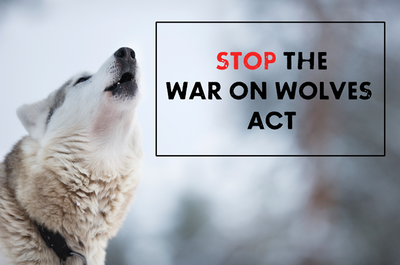
In April of 2011 Congress removed wolves in Montana and Idaho from the protection of the Endangered Species Act. The following fall, wolf hunting began.

When the state of Wyoming controlled its wolf population between 2011 2013, it employed a “kill-on-site” policy for wolves in 85% of the state. One of the victims being the famous 06 female that came to wolf watchers’ attention in ’09. She roamed outside of Yellowstone Park and ended up dying by the hands of a hunter who waited closely towards the outside of the park.

After an Earthjustice lawsuit in 2014, a federal court found that the Wyoming wolf management plan was illegal and put the state’s wolves back onto the federal endangered species list. In a lawsuit that was brought by the Humane Society of the United States, a judge turned management of wolves in Wisconsin, Michigan and Minnesota back into federal oversite.

Now, in 2019, there is another War on Wolves.

The Trump administration has released its plan to strip protection from nearly every wolf in the lower 48 states. It would be a major step back on the 40 year long wolf recovery. If this plan is enacted, it would return us to the days where wolves were shot on sight and killed in traps.

Not only would wolves be killed, but it would also damage the environment and also other wildlife. There is a huge chance that the damage would be irreversible and cause permanent, long-lasting effects.

The Journey Begins

Thanks for joining me!

I am a wolf activist, and the point of this blog is to help spread the word about the ‘War on Wolves’. 

I hope that this will not only inform people, but also help spread awareness of things that are going on. Every little bit helps immensely.

Listed below are some websites that have more detailed information:

Good company in a journey makes the way seem shorter. — Izaak Walton


Blog at WordPress.com.

Up ↑

Design a site like this with WordPress.com
Get started